Molly-Williams, an 8.5-year-old female black Labrador, had a long history of recurrent ear infections. In 2023, and again in 2024, there were concerns about Pseudomonas, a particularly stubborn infection known for resisting antibiotics and becoming increasingly difficult to treat.
In 2025 ear infections continued to reoccur, and in January 2026, despite antibiotic treatment, Pseudomonas was residing deep within Molly’s ear. She was referred to a specialist practice for definitive surgical removal of the diseased ear canal, a procedure used as a last resort when other treatments have failed. This surgery carries an increased risk of post-operative infection.
Three days after surgery, Molly returned for evaluation, and it was found that the wound had broken down and reopened. It would ordinarily have been re-stitched; however, cultures from the middle ear confirmed the re-appearance of the multi-drug-resistant Pseudomonas.
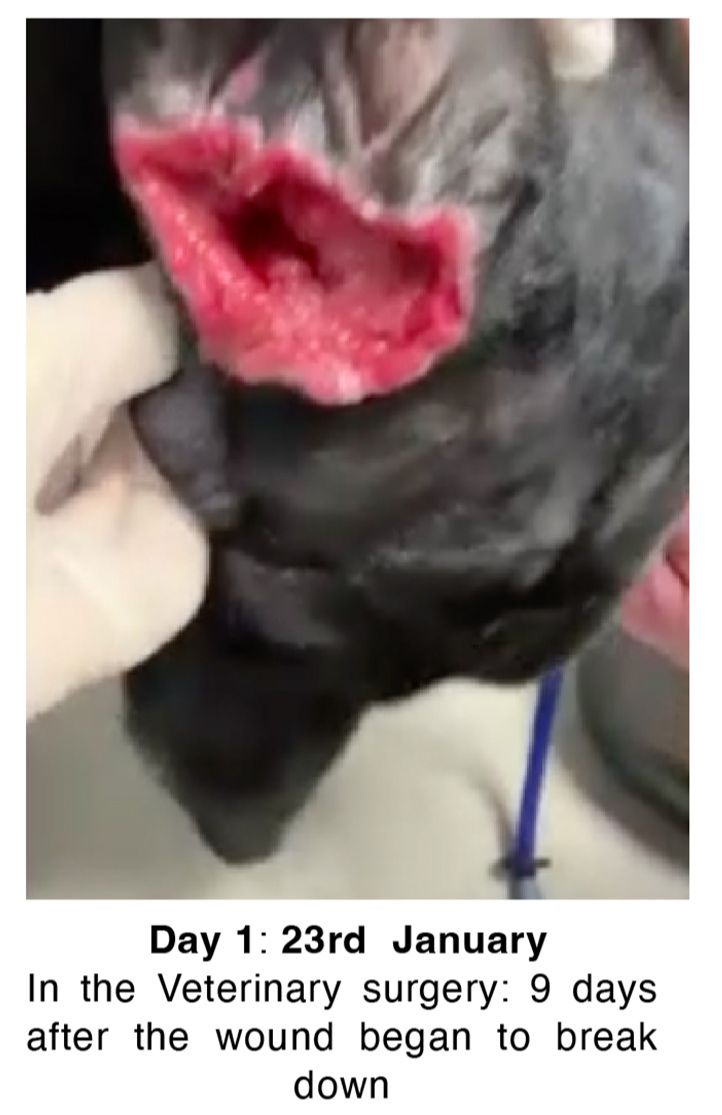
Initially it was managed with:
- Repeated general anaesthetic sedation (to reduce pain) to allow for wound flushing
- Medical grade Manuka honey to pack the wound
- Saline irrigation
- No systemic antibiotics use, due to the resistance profile
The remaining options discussed were euthanasia or continued wound management.
Due to the nature of the surgery, the wound tracked inwards toward the delicate structures of the inner ear. Deep flushing was necessary to address the infection, but it carried the risk of forcing infection deeper with potentially serious consequences. As repeated anaesthetics place significant strain on the body, this was reduced to every other day. After two general anaesthetics and two sedations, Molly was taking longer to recover. By day nine post-surgery, serious concerns had arisen regarding her prognosis.
On 21 January 2026, the veterinary practice sought my advice. I offered Molly oils with documented activity against Pseudomonas. Oregano, clove, cinnamon, lemongrass, thyme, and garlic, in that order. She responded to garlic and oregano, though her reaction to garlic was the strongest, laying down and becoming very calm and still with it. These two oils were added to dry green clay powder. Garlic essential oil contains allicin and related sulfur compounds that have demonstrated inhibitory effects against Pseudomonas aeruginosa, including interference with quorum sensing (blocking bacterial communication and cordination) and biofilm formation, mechanisms central to antibiotic resistance (Bjarnsholt et al., 2005; Borlinghaus et al., 2014). Oregano (Origanum vulgare) essential oil, has demonstrated significant in-vitro activity against Pseudomonas aeruginosa, including disruption of bacterial membranes and interference with biofilm formation, even in strains showing antibiotic resistance (Burt, 2004; Nostro et al., 2007).
This mix was dusted around the wound edges, and plain clay was used to fill the wound. Molly’s owner was given infused and plain clay powders to take home, as the application was applied three to four times daily. The following day, there was a noticeable reduction in inflammation (see Fig. Day 2). However, leaving it overnight for 9 hours, with no application of green clay, the ear became more inflamed and began to return to a deep crimson colour (see Fig. Day 3).
I therefore advised offering the clay and clay mix every three hours, including overnight, as it was completely absorbed within two to three hours. In addition, I suggested offering Molly two tablespoons of spirulina powder. She chose to take it dry and licked it up eagerly, repeatedly licking the empty bowl. I explained that spirulina has recognised immunomodulatory properties that support immune regulation (Cingi & Conk-Dalay, 2011), and that its use was important in reducing the risk of the recurrent ear infections she had experienced over many years.
Sophie, the senior vet commented: “After the introduction of the green clay and essential oils, signs of infection resolved rapidly. She had been slower and more lethargic during the period of repeated anaesthetics but became progressively brighter once these ceased. The use of green clay offered several important advantages: it eliminated the need for sedation to flush and re-dress the wound, and Molly was significantly more comfortable without a head bandage, which might otherwise have caused complications involving the left ear or underlying skin. When she came into the surgery today her coat was shiny and she was full of life, could that be due to the spirulina?”
Sophie, is now going to start IMIM Modules 1 and 2, paid for by the practice.
See full story in the new book, due for release in Spring 2026

